[ PRODUCT PAPER 02 — EXECUTION ]
The platform on the side of the cars
FanDrive is the official fan engagement platform of Caterham Motorsport UK — live timing, driver stories, race control and coaching for five championships and more than 150 drivers, from UK club circuits to Spa-Francorchamps, most weekends of the season.
Club motorsport has a strange gap in it. The racing is real — full grids, proper circuits, championships decided on the last lap — but the fan experience mostly isn’t. Timing lives on a specialist website, the stories stay in the paddock, and a spectator at the fence has no way in. FanDrive closes that gap: scan a QR board at the circuit and the event opens up — live timing, the schedule, the drivers, and what they said two minutes after climbing out of the car.
This Product Paper describes what FanDrive does, the operational reality of running it trackside, and the architecture underneath. It is the companion to the Nod Together and GetCommunityMail Product Papers: where Nod Together shows how small and restrained an Eirvanta product can be, and GetCommunityMail explores trust, FanDrive shows how far the same approach stretches in live operation.
What this demonstrates
FanDrive is Eirvanta operating at the other end of the scale from Nod Together: a multi-app platform designed around six kinds of user, real-time data ingestion from live sporting events, payments, a desktop application for race officials, and physical touchpoints at circuits — designed, built and operated by a compact founder-led team, on the same principles. If your question about Eirvanta is “can they handle something bigger and messier?”, this is the answer.
On a race weekend, software doesn’t get a second chance. Good engineering assumes it won’t get one.
Official platform, on real grids
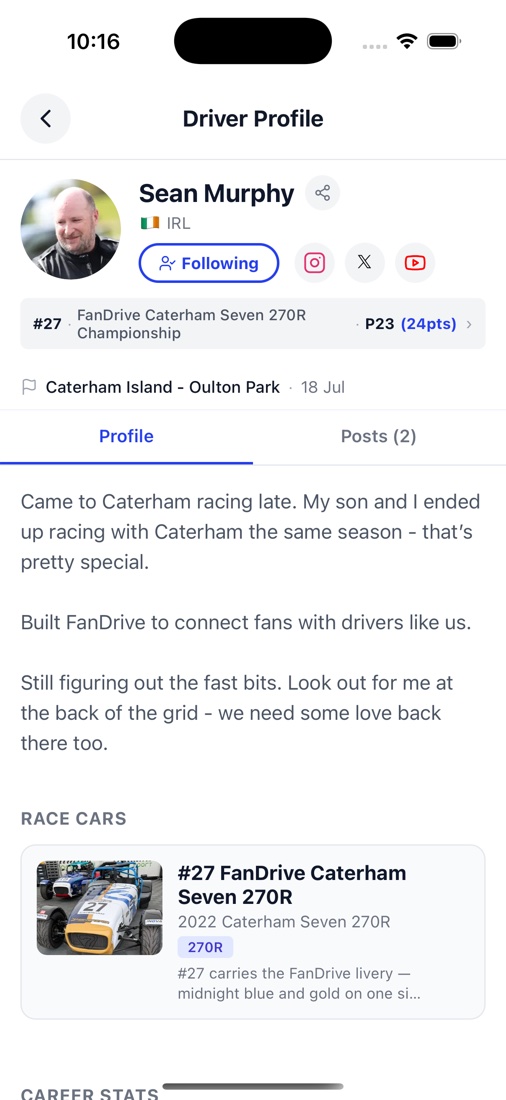
FanDrive is the official fan engagement platform of Caterham Motorsport UK, covering its five UK championships and a field of over 150 drivers, at events organised by the British Automobile Racing Club. The relationship runs deeper than software: FanDrive is the title sponsor of the FanDrive Caterham Seven 270R Championship. The brand is on the cars because the product is in the paddock — and so is its maker: Eirvanta’s founder races in the 270R championship himself, car #27, which is why the screenshots on this page show his own profile. FanDrive is built by someone who uses it with a helmet on.
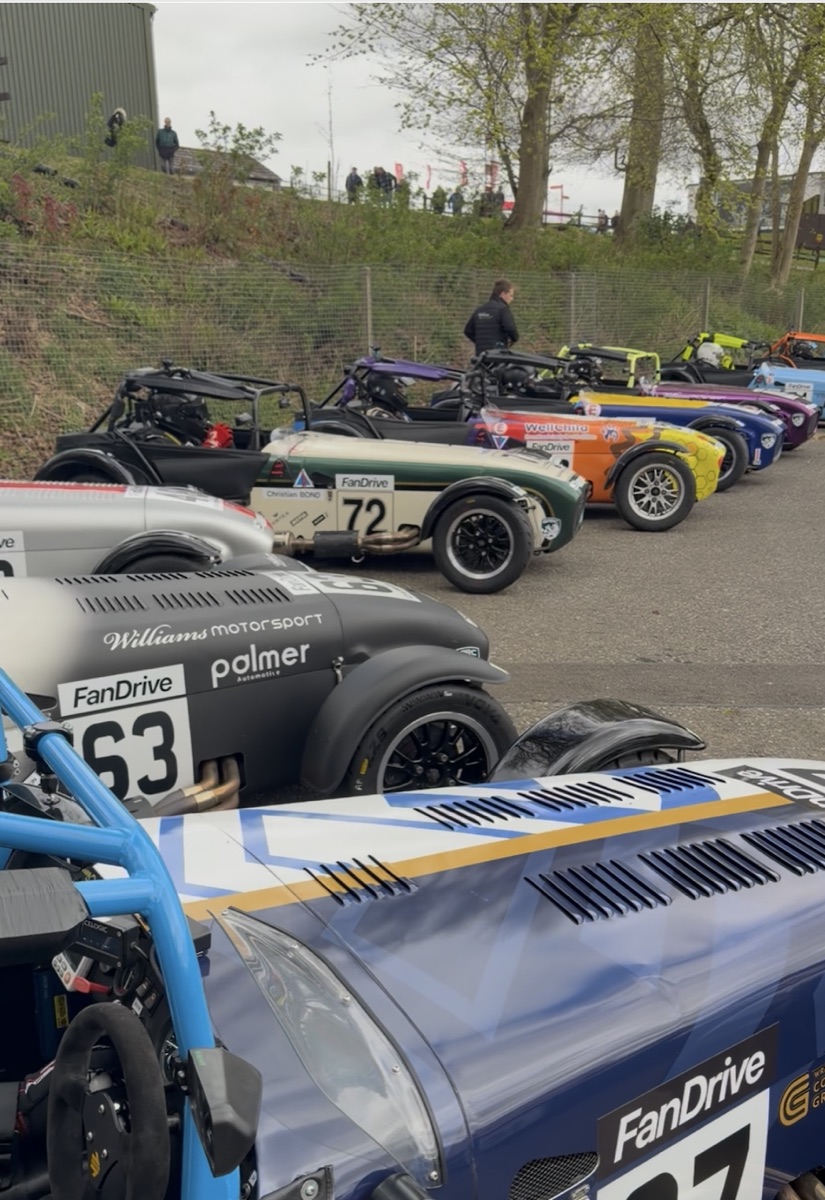
One platform serves six kinds of user:
- Fansa mobile app and web feed: live timing, schedule, driver posts, games
- Driversa professional app for post-session stories, results and telemetry history
- Organisersan operations portal: schedules, entries, announcements, analytics
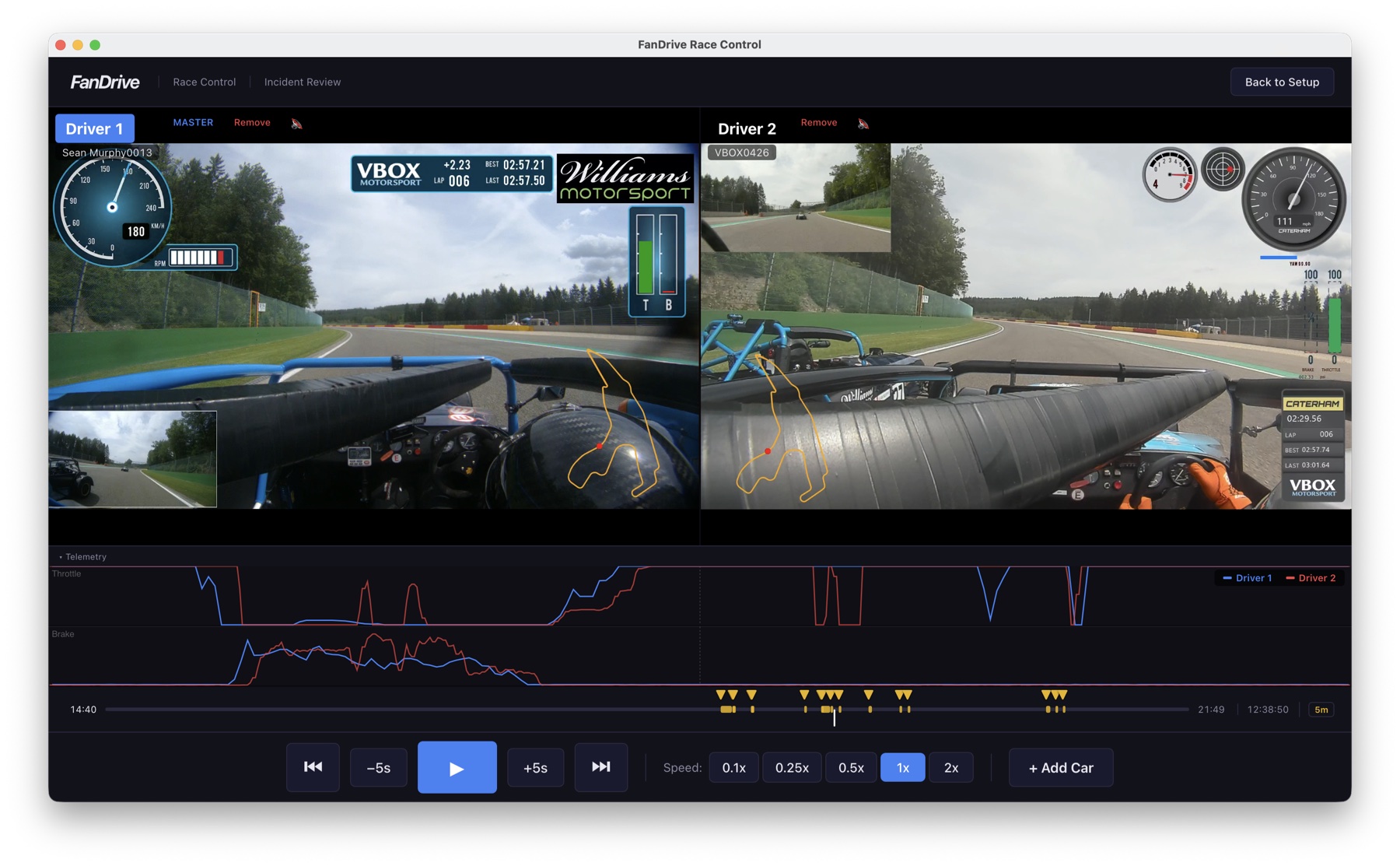
- Officialsa native incident-review application, in proof-of-concept with the BARC
- Coachesa marketplace for track-day instruction with payments — in operational rollout
- Teams & sponsorsportals for entries, results and activations
All of it hangs off one identity: a passwordless email code, shared by every app and portal, with roles and scopes deciding what each person can see and do.
Operating at the track
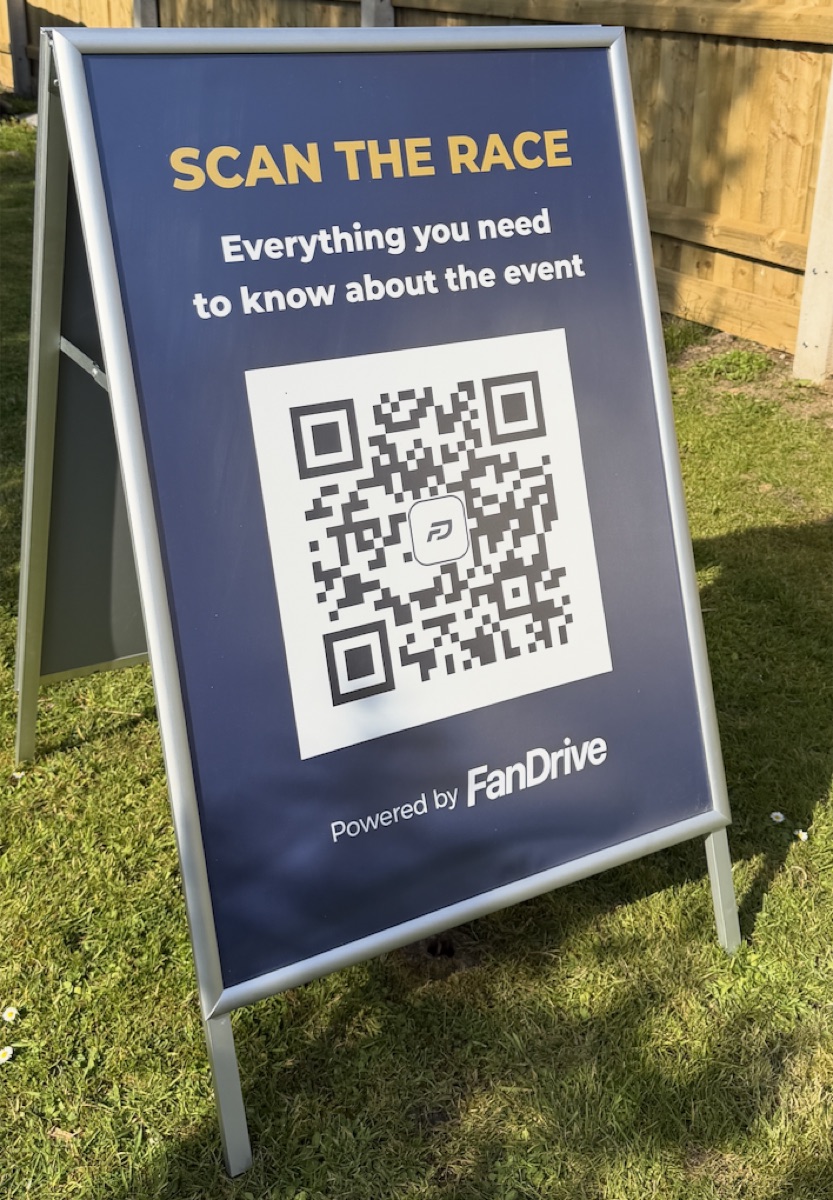
The product starts in a muddy paddock, not a browser. A-boards at the circuit carry a QR code — scan the race — and the event opens on the spectator’s phone: no app store visit required, no account, no friction between standing at the fence and knowing what is happening on the other side of it.
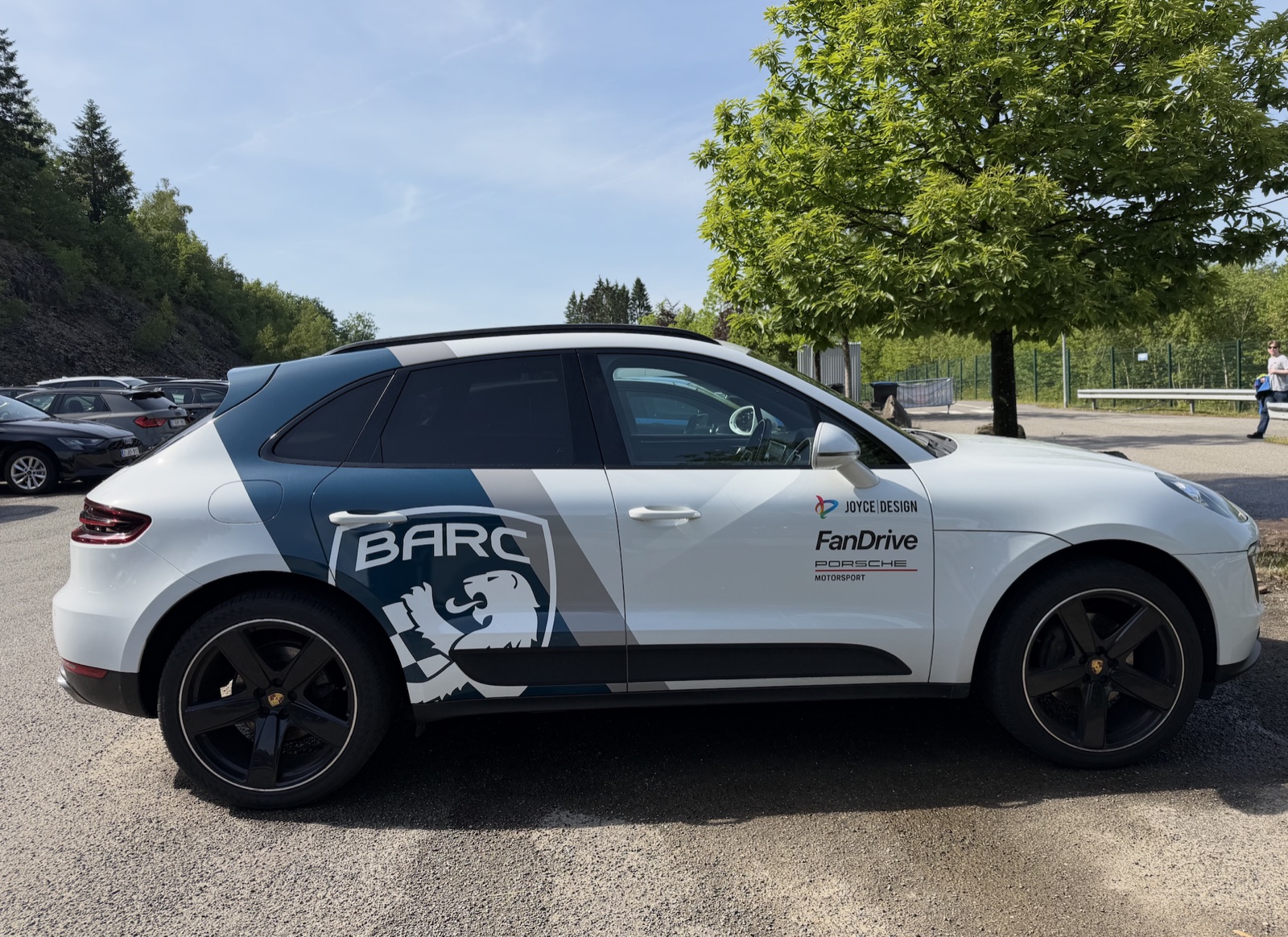
The QR codes don’t stop at the gate — every car on the grid carries its own, linking straight to that driver and car’s profile. See a car you like through the fence, scan it in the paddock, and you are following that driver before the next session starts. The same codes power scavenger hunts during events — families crossing the paddock car by car, turning a walk between sessions into a game.
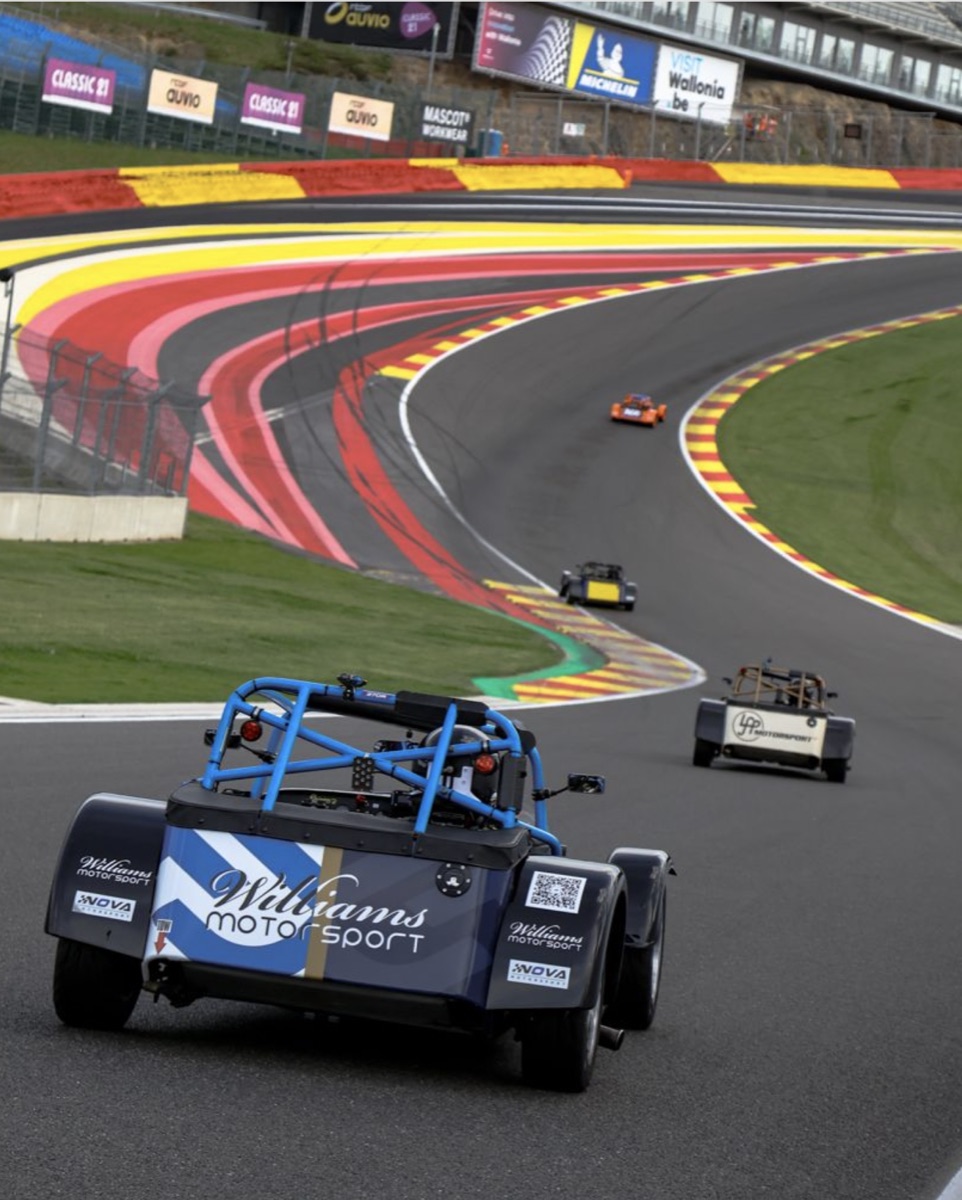
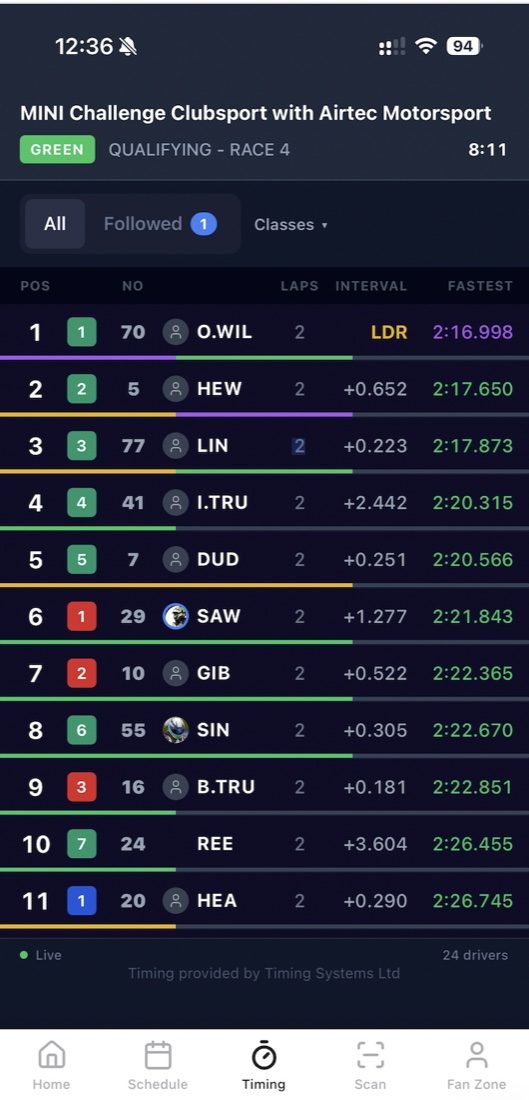
Behind the QR code, live timing flows in from the timing providers UK motorsport actually uses. Dedicated ingestion services consume the feeds, maintain session state, and stream lap times, leader boards and track conditions to connected phones in real time. CDN-served snapshots allow the audience to grow with only a small increase in origin load.
The live commentary feed is processed as the session unfolds — race facts surface in the fan app in real time, letting the story of the race develop alongside the timing.
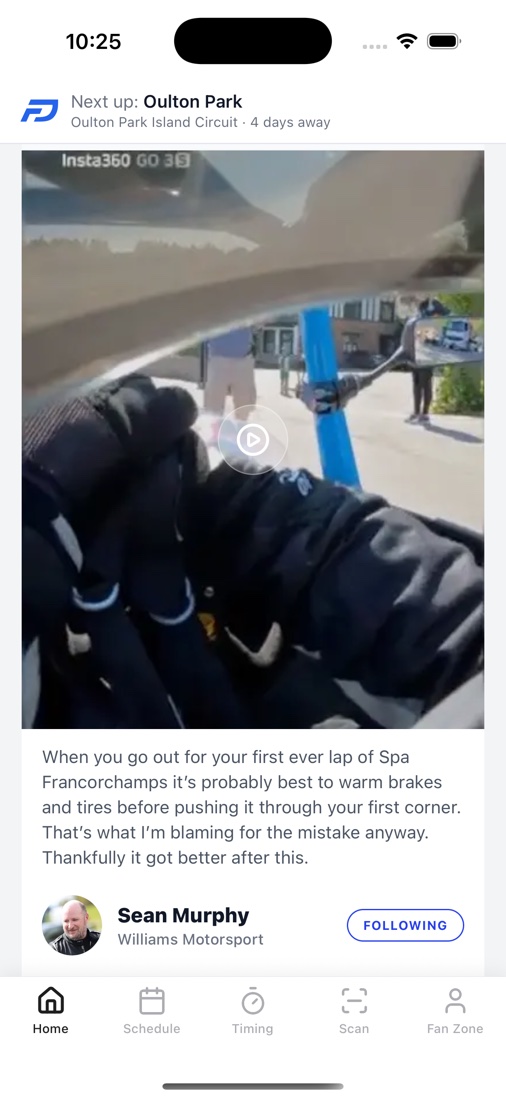
When a session ends, drivers get ninety minutes to tell fans how it went — but nobody wants to type a paragraph in a sweaty balaclava. So the professional app asks two or three tap-to-answer questions and composes the post from the answers. Deliberately, no AI is involved: the phrases are pre-written, the driver picked them, and the post is authentically theirs. If the paddock has no signal, an offline outbox queues the post and retries until it lands.
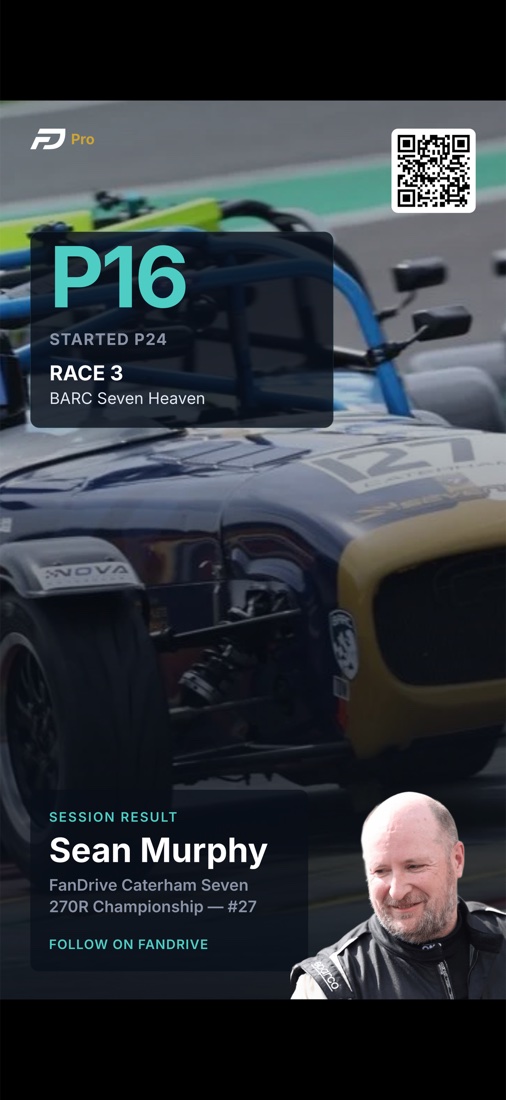
When a result is worth shouting about, the pro app’s share studio turns it into a social-ready card — result, car, championship and QR code composed automatically — so a driver’s good day reaches their followers before the helmet is off, and every share carries a way back into FanDrive.
Race officials are next — and how that tool is being built says as much as the tool itself. Race stewards are busy people: you do not get them into months of requirements workshops. So instead of specifying incident review on paper, Eirvanta put a working proof of concept in front of the BARC early — synchronized onboard video from multiple cars side by side, aligned against each car’s own logged telemetry, with variable-speed scrubbing and cryptographically signed reports, built and notarised for macOS and Windows like the professional software it is.
Stewards react to something real, between sessions, at actual race meetings — and the feedback cycle does the work a meeting series never could. The product earns its requirements where it will be used.
Design decisions
- One identity, many doorsa single passwordless login serves fans, drivers, organisers, coaches and staff — roles and scopes do the separating, not separate account systems
- Feed as a contracteverything a fan sees — live state, announcements, driver posts, games — is one ranked, deduplicated, expiring feed; announcements generate themselves from the schedule
- Offline is normalcircuits have terrible signal; the apps queue writes and batch telemetry, and nothing breaks when the network does
- AI for facts, never for voicesrace facts are generated from live commentary data in real time; driver posts are deterministic compositions of the driver’s own choices — a fan should never wonder whether a machine spoke for a person
- Money handled properlythe coaching marketplace (in rollout) runs on Stripe with manual capture, per-day settlement and weather-aware refunds — the unglamorous parts done right
Technical architecture
Where Nod Together is deliberately tiny, FanDrive justifies real infrastructure — and the discipline is in matching it to the problem rather than the fashion:
- MobileTwo React Native apps (fan and pro) from one shared component library
- WebFive Next.js portals — organiser, driver, staff, exhibitor, public
- APIAn API hosted on Azure cloud, serving the apps, portals and timing services
- TimingDedicated ingestion services per timing provider, with leader election
- Real-timeAzure Web PubSub to phones; CDN-served snapshots as the durable record
- DataCosmos DB for the platform; Azure Data Explorer for analytics
- Race controlElectron desktop app, code-signed and notarised
FanDrive has evolved through five production-informed iterations, each version shaped by use at live events — the earlier ones are archived in the repository history, which is exactly where prototypes belong.
See it
FanDrive is live at circuits across the UK throughout the season — and online at fandrive.net.
Open FanDriveAbout Eirvanta
Operational software proves itself through execution. FanDrive is owned and operated by FanDrive Motorsport Ltd; Eirvanta serves as its product and engineering studio, with the companies operating separately under common ownership. Eirvanta LLC is an independent product studio. We build small, purposeful products and learn through real use.
We also build products like this for others — the same approach, documented in the Nod Together white paper, scaled to the size of the problem. If you have one, talk to us.
More at https://www.eirvanta.com